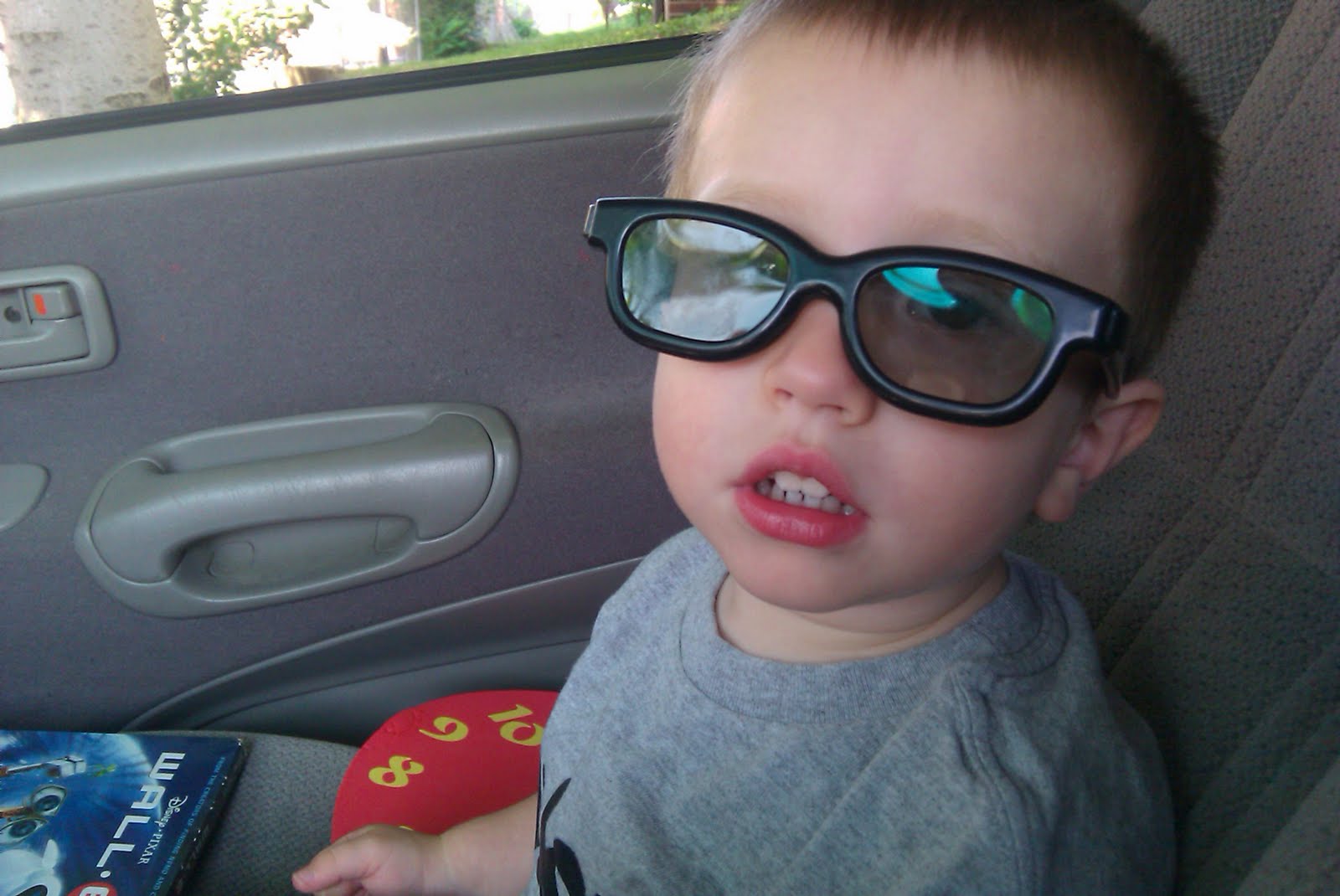
Many thanks to my son for putting his toy car in my bag this morning. He knows what I like.
Many thanks to my son for putting his toy car in my bag this morning. He knows what I like.
I feel a need to apologize because I have let many people down. Now before you feel like this is a generic plea for attention, let me assure you that I am not writing this post to gain pity. As you will see by the end of this blog, I am optimistic about my life and future. I am writing this to better understand what I have experienced. Writing is cathartic, and I am ready to explore my thoughts, feelings and actions in hopes of letting go and moving on. For many months I have been withdrawn from family, friends and other activities. Despite the many excuses that I have used to justify my solitude, it has been intentional.
The person that I owe the biggest apology to is my wife. She has been more than generous these past four years in giving me the opportunities to be where I am at today. She has inspired me to move beyond the average aspirations of Archie and reach for the highest goals. For too long she has carried the burden of being financially responsible for our small family. While I have had employment and student loans to supplement our income, I have not put in my share, and she has needed to make up the difference. Many times I would sit back and just figure that things would work out on their own, and it would be my wife who figured out how to make the ends meet, how to move us across the country and how to provide us with food clothing and shelter.
Now a mere sentence isn't going to make her life any easier. It is going to take a lot of work and energy to balance both school and work, but it is something that I need to do, not just for my wife but also my son. I would like to think that I am a great father, and in many ways I am. I love spending time with him—reading, wrestling, watching fire trucks or just cuddling. However, he needs more than a friend; he needs a dad that is there both physically and fiscally. He may see me less often, but he needs to be provided for by both parents and not just one.
Columbia has humbled me. I miss the days of being the smart one in the class and not having to study for anything. It seems now that I spend an obscene amount of time studying to be the person who is completely lost in the class. I need to make my time count here. I need to appreciate where I am at. While grades are important, I came here for an education. I will sound elitist for saying this, but I would rather be a B student from Columbia than an A student from somewhere else.
The greatest gift of being at this school is my peer group. I have never met so many amazing, talented, friendly and social people at one time as I have in the last few months. I need to spend more time with them. I can no longer hide from their invitations for dinner, parties and even study sessions. These people are the reason why this school is amazing. The professors may be smart, but the students and my class-mates rock!
I have been reclusive at church also. There was a time when I spent several hours a week working on projects and other church activities, but now I slip out the door when no one is looking. There is a wealth of friendship that is just waiting to be found within those doors, and I haven't opened them yet.
Lastly, to my family and friends, I am sorry for not answering my phone. I have felt like keeping my head under the ground until I had some good news to share, and in doing this, I have lost touch with so many people. Thank you for your repeated calls of care and concern. It is great to know that even with all of your responsibilities and burdens, many of you take the time to call me just to say hello and make sure that I am alright. I still may not answer the phone all the time, but I promise that I will work on it.
Now that I have gotten through these confessions, I am dropping two classes this Spring term and getting busy looking for a real job that will allow for professional development, personal satisfaction and a chance to finish my education. If you know of something, let me know. I am excited for a change and a chance to grow into a better, friend, brother, uncle, husband and father. As a great friend told me recently, I never take the easy way, and I am looking forward to this next challenge.


I'm not a man. I won't play the role assigned to me- the role createdNorse clearly understood that there is more to being a man than what we are taught in our culture, and argues against the traditional allocation of gender roles. He asserts that these identities are "created" (Norse) and disseminated by popular media. Men, like women, escape a simple definition. Each gender is complex, and ought not to be categorized simply by sex, yet the feelings that many men experience, like tenderness and vulnerability, must be hidden in order to maintain the illusion of masculinity they are assigned.
by Madison Avenue, Playboy, Hollywood and Oliver Cromwell,
Television does not dictate my behavior.


At the Pagan Pride festival, little man chose a Cherry Garcia ice cream bar for a snack, and it was delicious. We are chilling at Battery Park watching the boats, people and Sponge Bob.

Since little man and I were awake early this morning, we decided to go share some French Toast at Tom's diner.


Eating mac&cheese on our new table the wife bought for 20 dollars, is a great way to spend an evening.

Just another reason as to why we are awesome!


I took Little Man to the park this afternoon, and taught him the art of rolling down a hill. That is what dads are for.


This morning I got my very own subway car. I had just finished at UPS, so I must have smelt really bad if no one wanted to come in with me.

Spent some time tonight in Washington Square Park thinking about life. No answers, just thoughts.

Here we are in Douglas Wy. with nothing to do but sit and hope that the highway opens soon.
When one considers religion as field of Academic study, the societal influences and cultural biases create a world where creed, code, cult and community clash against the secular understandings of a nation that claims the autonomy from religion in daily life. The very definition of religion opens the door to seeing the most mundane and minute beliefs and practices of the American people as religious gatherings. In accepting the "American Religion" of freedom and the right to express one's self, bridges of understanding are built between former foes, and pluralism becomes a new format where all belief is sacred and "the other" transforms to one's brother.
Defining religion in the terms of creed- the word or belief of a people, code- the rules or boundaries stemming from the creed, cult- the group practices and traditions and community- the social structure of the organization, allows the scholar to analyze all aspects of American culture from sports to government and fraternities to churches. This broad characterization may seem daunting to those who wish to keep a system of easy labels, but this classification also gives credibility to the young religions of America trying to establish their theology in a nation awash in relativism.
Prior to taking this class, my personal experience had lead me to judge that the religion of Scientology was not a religion at all, but an elaborate systematic approach of using blackmail, extortion and fear to gain power and money. However, this course helped me to differentiate the cultural practices and personal beliefs of the religious men and women of all faiths. Breaking past my prejudice and judgments, I see the common thread of their religion to my own- their belief to mine- our shared goal of a better world where everyone gathers according to the dictates of their own conscience.
Furthermore, as people are able to distinguish the cultural traditions in their religious worship, they are given the opportunity to find their faith once again. There can be no doubt that religion and culture constantly rub and crash against each other; creating two separate yet similar worlds full of art, inspiration and order that shape our society for good and bad. In removing the cultural influence from religion, religion can be found in an undiluted form. This concentrate becomes the basis for a new faith free from the changing trends of modern culture. In removing religious influences from culture, societies may examine their motives for change and no longer hide behind the mask of religious conviction to enact change or suppress humanity.
In conclusion, the religious diversity in America is what defines this nation. In all our actions, words and beliefs, our nation constantly changes to meet the needs of its citizens. In recognizing that we are united by our differences, we are no longer defined by what we are not, but we become a people who embrace "the other" as they are us, and we are them.

After eating three slices of french toast at Dees, Little Man kicked back to relax and enjoy the conversation.
I just finished my last draft of a humor essay for my class. This was fun to write, and I hope it is fun to read also.
I had just turned 12 and starting the 7th grade in a new state. This could be seen as an adventure for some kids, discovering new friends, new teachers and new ways to skip class. For me this was not the case. I had just finished my first year of middle school in Texas where 6th grade is the starting point, and I dreaded the thought of facing the social pecking order where I was sure to be on the bottom. In Tennessee, I was starting the new school year at MacMurray Jr. High as an outcast; I was white, fat and the new kid. Oh yeah, I was also a Mormon in a school filled with Baptists.
The first day of class we found that each classroom had a list of names containing the students that were to gather there for "homeroom announcements." Since it was the first day I felt relieved to find that the teacher had assigned our seats, so that I had a guaranteed place to sit without the rejection that came from asking the dreaded question: "Is this seat taken?"
The Vice Principal came into our room to inform us that we would be taking a test on our first day, "This test doesn't count for anything." She said. Since there wasn't a reason to lie to us, I took her at her word. Surely if this test meant anything, they wouldn't offer it on the first day, or at least they would wait until the end of the day to test us. What could they possibly test us on: the color of lockers in the hall, or the number of our school bus? Our teacher reinforced this while handing out the test, "Don't feel pressured because it doesn't count for anything. In fact, we won't even grade them." She said. I believed her.
Immediately after my parents' divorce, I learned that any in-class work could be skipped if I put my head down on the desk and kept a solemn look on my face. I was in 1st grade, and was tired one morning when the teacher stopped her lesson. "Archie," she said, "is everything alright? Do you want to go talk to someone?" Right away I smelled weakness, and I knew that I had the upper hand. From that point on when the class got boring or when we started math, I would become very "sad" and need to talk with the counselor while playing with the assortment of trucks in his office. He would try to get me to talk with him, but my reply was always the same: "Talking about it makes me miss my daddy." He stopped asking, and I kept playing. This act was a win-win-win for all of us. I got to play; the teacher didn't have sad kid in her class, and the counselor felt that he was helping me through a rough time in my life.
Since this test "didn't count" I figured that I would just fill in some bubbles on the scan-tron and spend the rest of the time counting the little holes in the ceiling tiles with the "sad" look on my face. This worked and after watching the other kids in the class struggle with the test for over an hour, I felt pretty smart for not wasting my time with a test that didn't count.
Right away the bubbled answer sheets were collected and whisked away to the front office. In class we reviewed the school and classroom policies while I tried my best to blend in with the rest of the students by un-tucking my shirt and messing up my combed hair. I would have traded my little sister for an Atlanta Braves jacket right then. More than half of my peers showed their support for the Braves with either hats or coats. I remained one of three White kids in the room trying desperately not to notice the turning heads and hushed whispers.
Soon after the all the rules had been reviewed, the Vice Principal returned with more news. "We will divide you up into smaller groups for your actual classes. " She said. "These groups will meet with the other 7th grade homeroom classes for your courses." One by one, she read the names of the students and their assigned group. I became a Mac. I couldn't think of a better group name than something from McDonald's, so this new school was starting to seem really cool after all.
Within weeks of class starting, even the small kids were picking on me. My ability to blend in didn't work in this place where adolescence was the eighth circle of Dante's hell. My name had been changed to "Doughboy" or "Marshmallow Man" with the teachers joining in on the joke. One short, stocky woman who had the honor of educating the largest group of seventh graders ever assembled in one class would often mutter "Mormon" or "Doughboy" when passing my desk. Prior to entering this school, I did not know what puberty was. Within hours of passing through the doors, I was introduced to a world of body odor, hair and testosterone that rivaled the locker rooms of the NFL. I would have been shoved into my locker daily, but after their first attempt, and realizing that I could not fit because of my roundness; my "friends" decided that kicking my books was a better option.
I couldn't figure out why they hated me so much, the classes were super easy and everyone had just as much time to answer the questions as I did. The lessons went a little something like this: Teacher- "How do we kill the germs in water?" Archie- "Boil the water." Teacher- "Back when all the continents were together, what was that called?" Archie- "Pangaea." Teacher- "Why is Doughboy answering all the questions?" Doughboy- "I don't know."
I took the teasing and the kicking just as some test of my character. I never let it get to me, and mostly figured that since the majority of the kids were Baptist and I wasn't, that must be the source of the problem. Until one afternoon when a girl who towered next to me in her desk asked a simple question that answered all of mine. "Why are you in the retard class?" She asked. With that question I looked around the room and realized why I was hated; with thoughts reviewing the past weeks of abuse and scorn, I noticed that my classmates looked a couple years older and in most cases they were. Our "Mac group" was the remedial class. They had all been held back from advancing and resented anyone who showed signs of moving on.
The words of the Vice Principal echoed in my head: "This doesn't count for anything." She was right; they never showed us our graded test, or even entered them on a class log. That boring test I choose to sleep through was a placement test, and that was the moment that I learned that sometimes even when it doesn't count, it does.

Little Man had a full lunch today consisting of free samples from Mother Earth health food store in Sandy. Fruit, breads, soymilk and cookies, who could ask for anything better?
This lyric essay was for my English class. I find that writing non-fiction stirs up some old memories, and the more I write, the more I remember. Perhaps some good will come from all this writing...
On March 23, 2008 I became a dad. Standing next to my wife after 30+ hours of labor, we were anxious to greet this new baby into our family. I stood by my wife's side pushing, pulling, comforting and coaching her long into the night and into the early morning of my best Easter ever. When the midwife asked me if I wanted to catch the baby I quickly responded that I didn't know, but that did not stop her from telling me how to cradle his little neck into my hand and prepare for the next push. My son, a beautiful gooey mess of purple skin and slimy hair, slid into my hands at 1:11am, and my life changed forever. I held him as he took his first breath. I held him as he cried; shocked at the cold air that now surrounded him. I held him as he nestled into his mother's arms. I was a daddy.
When I was eight I didn't know how to ride a bike. This wouldn't be a problem if my friends didn't like to ride, but we were living in Louisiana, where every street and vacant lot had an adventure to be explored. I tried to blend in with my training wheels keeping me upright, but how could any self-respecting lizard hunter and tadpole collector go on safari with training wheels? My parents had divorced several years earlier, and despite my mom's best effort to give us everything we needed, I still needed a dad. That is where my French speaking friend Felix stepped in, and taught me one of the most basic lessons in life. We hijacked my sister's training wheel free bike and started practice. I fell, and I fell a lot. When I wanted to quit, I was told that the only way to learn was to get back on and fall some more. Felix patiently helped me off the ground and on the bike every time I fell. Finally the moment came when I was pedaling faster than he could run. I was on my own! I wish I knew the words that Felix shouted as I made my way down the sidewalk and across the street. I wish that I knew the words in French to thank my friend who stepped into a role that wasn't required of him. I wish I knew where he was today.
At thirteen I was the fat, white, Mormon kid in a school where I did not fit in. Tennessee was not a great place for me to attend junior high. Really though, is there ever a great place to attend junior high? Up until this point in my life, basketball was played on a six foot hoop with friends late into the evening. This concept of a ten foot hoop played in a gym with a bunch of large strangers seemed foreboding at best. Not knowing any rules, I hoped to avoid detection by just standing to the side and letting the other boys work their magic. I was great at standing. In fact, I was so great at standing that they let me stand under the hoop and took turns driving down the key and slamming their massive frames into my prepubescent body. Since they all seemed to enjoy this, I must be doing something right. So in spite of the pain and embarrassment I remained under the hoop to serve as the "dummy" for their practice. It would have been nice to know the rules of the game, but I did not have that option. Life dealt me a hand free from the education of sports and the knowledge of how to stand up to a bully. I didn't like it. I didn't know any different. I thought that this is just the way life is.
My son is still growing. At 18 months, he has life figured out. He knows how to eat. He knows how to communicate as he makes the signs for "food", "milk", "more" and "diaper." He even knows where to find my wallet and pull out all of its contents. The other day we were in the backyard, and I was watching him play on the slide. Climbing up the ladder and then going down the slide, he spent his time enjoying the beautiful day. After a few climbs and a few slides, he lost his balance and was close to falling off the slide. I watched from a distance knowing that he was only two feet from the ground, and that as much as I wanted to help him back into place, it was important that he learn life lessons like this on his own. He eventually climbed back into place. Looking around the yard he saw me and smiled. Taking a break from his toys, he climbed into my lap seeking comfort and love from someone who will always be there to give it. I love my son. I enjoy every moment of watching him grow. I am a dad.
The Great Delusion
Among philosophers from different backgrounds, the free will problem continues to create debates and stand in contrast with the omniscience of God. If one supposes that God is a perfect being, all knowing, all good, all powerful, then how can man act independently of God's will? Wouldn't the will of an all-powerful god have power to force the human race into submission? From the Determinist to the Libertarian, many conflicting views create the uncertainty of our role in the world.
In order to come to an answer about free will, we must first understand the three schools of thought in regards to the nature of God. By understanding the theology and definitions of God, we can then define our relationship with Him.
I claim that free will does exist and does not take away any traits from a perfect God; rather the existence of free will proves that not only is God omnipotent but also merciful and loving—traits that should be held by a Supreme Being.
A classical theologian like Thomas Aquinas (1225-1274) subscribed to the theology of determinism which is: "the view that everything that happens is uniquely determined to happen by prior events and states of the universe (Shatz, 556)." In other words, God has already set life into motion, and everything that will happen has been decided by God before any person came into existence. A determinist believes that God is the source of everything. If anything happens, then it happened because God wanted it to be that way. All of our actions, past and future, have been decided, and we are not free to act on our own.
This philosophy is strengthened when one considers the omniscience of God. If God is all knowing, then He knows how we will act. A perfect God must possess this attribute of knowing everything in order to be supreme. If God knows that something will happen, then it must happen or He will no longer be omniscient— and no longer worthy of our worship.
While this form of belief may bring comfort to many who look for order in a chaotic world, this notion of God eliminating our ability to choose unsettles many. For those looking to have a personal relationship with deity, the deterministic view is cold and subservient. According to William Hasker, a professor at Huntington College, this relationship with God can be compared to a puppet tied by string to a puppet master who controls all movements and voice (Shatz, 56). In following the deterministic philosophy, a person surrenders all autonomy to this higher power and acknowledges their station in life as the will of God.
The critique of determinism continues with the issues of sin and evil. If one supposes that a benevolent God is the source and cause of everything, then where does evil come from? How could a perfectly good God create evil? How can a person sin when God has decided that choice for them? To answer these questions while keeping with the deterministic philosophy, all things are done because that is the way God had planned it. This answer does not provide any clarity on the questions of evil and sin, nor does it help the believer build a personal relationship with this God. In claiming that God is the source of all suffering, the believer cannot seek comfort or refuge, or plead for help from this being. This callous thinking comforts only those who want to have a concrete explanation for the mysteries of life.
The philosophy of the Compatibilist closely resembles that of the Determinist in that a person's free will is real and in harmony with determinism. A person can act according their own will and desire if it is true for them to act at that time. A person can only make a choice if that choice has been approved. With compatibilism, God retains all His power, knowledge and goodness while still allowing humans their freedom to choose.
The compatibilist argument satisfies both the need for God to be perfect and the human need for independence. Each and every person is able to act according to their own will. However, this idea of free will cannot be real if our choices are contingent on the need to be "true" for us. We have two choices when waking up in the morning: get out of bed on the right side, or get out of bed on the left side. We could choose either option, but the perfect omniscient God would already know what side we will get out from. This perfect God cannot be wrong. Therefore, our action must comply, and be "true" for us. The only choice we can make will be the choice that God already knows. While we may think that we have options, God knows that we have only one action—His action; thus causing our free will to be nothing more than an illusion.
This illusion of free will may still give comfort to people who look to God for answers to life, but there are many still that do not see how an illusion of free will is the same thing as being able to choose. We are still trapped inside of a prison even if we do not realize it.
Libertarians, or incompatibilists, argue that free will is real. According to Hasker: "an agent is free with respect to a given action at a given time if at that time it is within the agent's power to perform that action and also in the agent's power to refrain from that action. (Shatz, 55)" A person can act however they desire if they are able to and if they can say no. We simply can't try to fly and then claim that God is restricting our free will because we are not able to avoid the law of gravity, but we could choose to jump off a cliff, or choose to not jump off a cliff without any determined outcome. In this view of free will, we are truly free agents to according to our own desires.
This libertarian view of free will also eliminates the problem of sin and evil. People are free to choose—to sin or not sin. If a person is considered "evil" or a "sinner" they have chosen that path; God did not decide this for them.
However, the problem with this idea arises when talking about the power of God. In the libertarian philosophy, God is no longer all knowing as there is no way that He can know how we will act if the choice is left to us. If God does not know something then He is no longer perfect. The Libertarian now must tweak the concept of God to fit with his definition of free will.
God is still omniscient, but that does not mean that He sees the future. Rather as an all knowing God, He knows everything that can be known. He cannot be expected to know things that have not occurred as they have not yet happened. Strengthening this argument further, the Libertarian then asserts that God knows all the possible outcomes for any situation we are in. While He may know our many options and their outcomes, He allows us to make that choice for ourselves.
In comparing these three views, we can quickly eliminate the compatibilistic argument as they eventually revert back to the deterministic view that the outcome is already known to God and therefore must happen. The remaining two arguments both have strengths that appeal to the believer. The God of the Determinist is all knowing; there is nothing unknown or surprising to this God. The Libertarian will admit that there are things that his God does not know.
The Determinist takes comfort in knowing that all problems and sorrows come from God for some unknown reason, but by faith they accept this as divine. The Libertarian cannot answer for the calamities that fall upon the human race. However, the Libertarian can claim to be a free agent in respect to God while the Determinist can't. The Libertarian takes comfort in building a personal relationship with this Supreme Being whereas the Determinist's relationship with God remains distant and cold as they have no claim on their own actions of good or evil.
The libertarian argument remains the stronger of the two as it clearly allows for a more intimate understanding of God. In their argument of God's omniscience, they do not take away from His power and glory, but they still are able to explain the problem of evil and sin. The deterministic view creates a rigid unbending law that can only be explained by denying simple logic. One must deny that free will exists, and also they must deny that God is able to change.
I agree with the libertarian view also because of my desire to act as an independent agent. Clearly there is a selfish reason to this thinking, but the evidence of their argument also allows for God to still know all possible outcomes. Isn't that knowledge still worthy of worship? The assertion that free will is just an illusion still remains a possibility, but clearly delving into a debate on relativism in regards to this will only lead to more questions and fewer answers. In believing in free will and the existence of a loving benevolent God, we must subscribe to libertarianism as that theology allows for both the perfect God and the free man.
Shatz, David. Philosphy and Faith: A Philosophy of Religion Reader. 1st ed. New York, NY: McGraw-Hill Higher Education, 2002. Print.

In my attempt to go "green" and lose weight, I bought this bike. Soon I will be riding to work and school on this new friend, but first I need to get around the block without having to take a break. This is going to be a great workout.